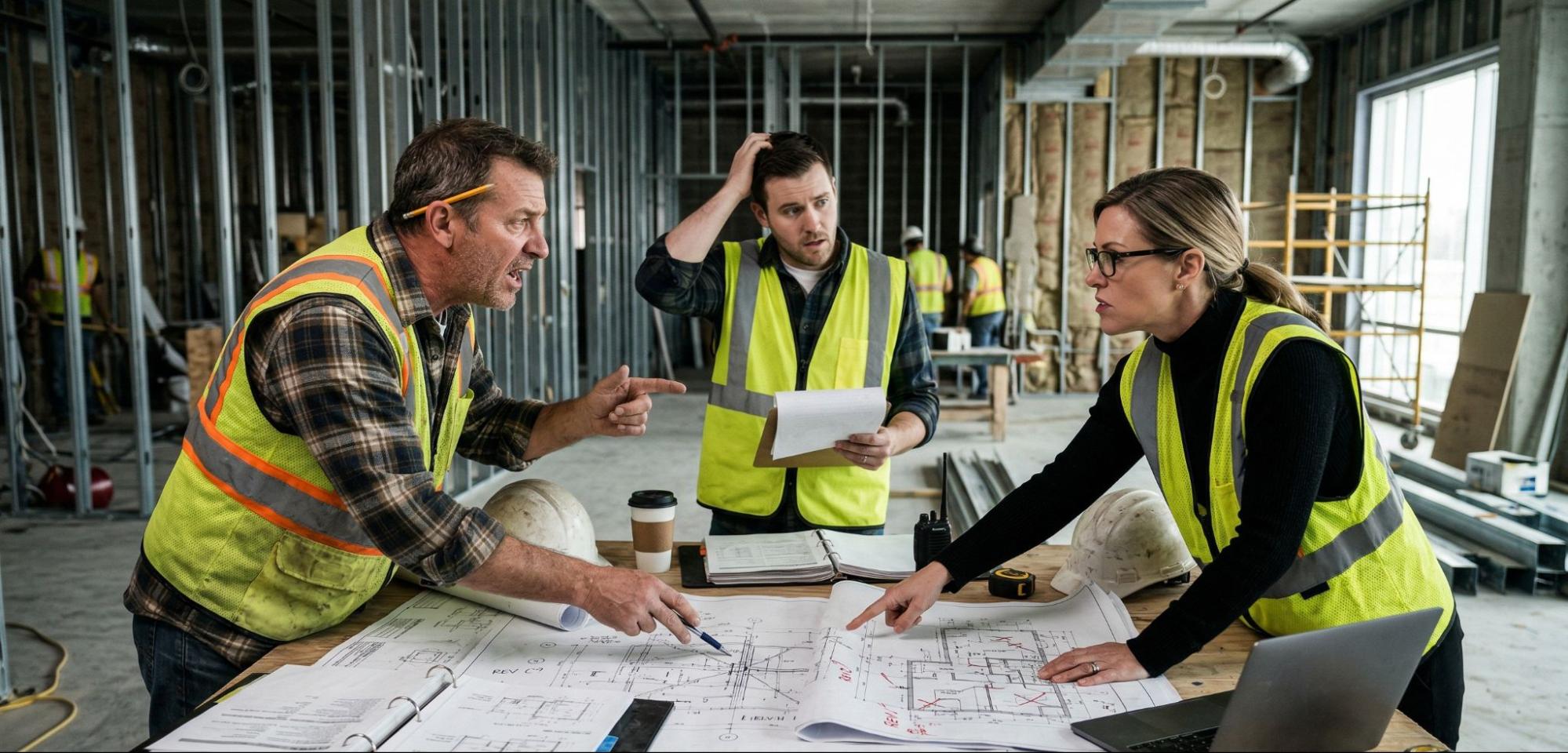

Here’s a conversation that happens in procurement departments and project management offices every week: a commercial owner or PM requests quotes for as-built drawings and gets back numbers ranging from $2,500 to $12,000. All three firms claim to be doing the same thing.
The spread isn’t arbitrary — and it isn’t just markup. Those quotes represent fundamentally different approaches to producing as-built documentation: different methods, different deliverables, different levels of accuracy, and different downstream risks if the drawings turn out to be wrong.
Understanding what drives as-built drawings cost means understanding what you’re actually buying. This post breaks down the full pricing picture: typical ranges by project type, which variables move the number up or down, and what separates a low-cost quote from a high-value one.
QUICK ANSWER
As-built drawings cost using professional 3D laser scanning typically ranges from $2,500–$5,500 for small commercial spaces under 3,000 SF, $3,500–$8,000 for mid-size commercial tenant spaces, and $8,000–$55,000+ for large or complex commercial properties with full CAD or BIM output. The single biggest variable isn’t square footage — it’s the deliverable format. A set of PDFs and a laser-scanned Revit model of the same building are not comparable products, and they shouldn’t be priced the same.
Why As-Built Drawings Cost Varies So Much
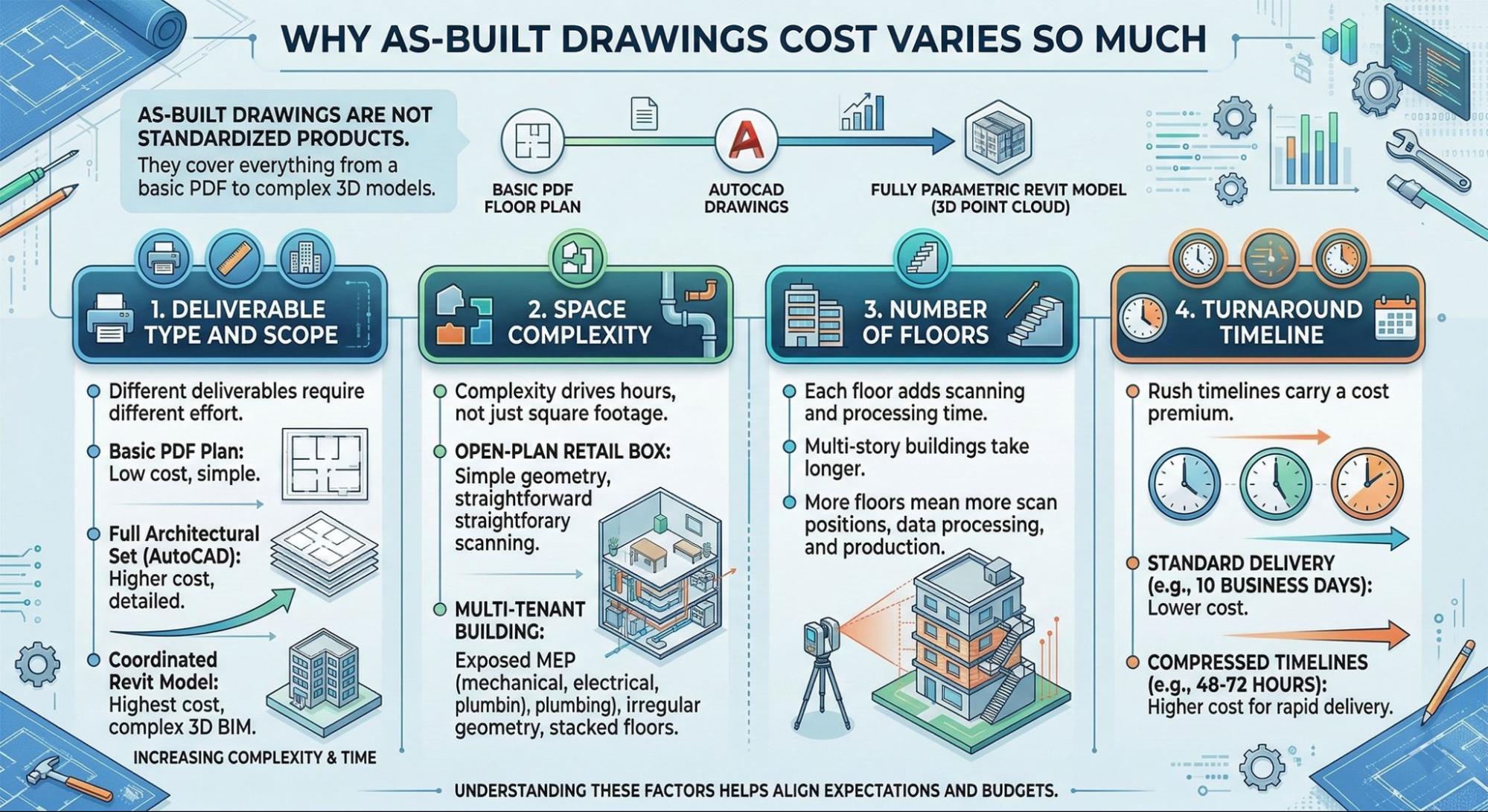
As-built drawings aren’t a single, standardized product. The term covers everything from a basic PDF floor plan to a fully parametric Revit model built from a millimeter-accurate 3D point cloud. The inputs, labor, technology, and output quality vary enormously across that spectrum.
Four variables do most of the work when it comes to pricing:
- Deliverable type and scope — A single-floor plan in PDF is a very different deliverable than a full set of architectural drawings in AutoCAD, which is again very different from a coordinated Revit model. Each step up in deliverable complexity adds time, software, and expertise.
- Space complexity — An open-plan retail box is straightforward. A multi-tenant office building with exposed MEP, irregular geometry, and stacked floors is not. Complexity — not just square footage — drives hours.
- Number of floors — Each floor adds scan positions, data processing, and CAD/BIM production time. Multi-story buildings are not priced as a single flat fee.
- Turnaround timeline — Rush timelines cost more. Standard delivery on a commercial project is typically 10 business days. Compressed timelines of 48–72 hours carry a premium.
As-Built Drawings Cost by Project Type
The following ranges reflect professional 3D laser scanning documentation with CAD or Revit deliverables and field-verified existing conditions.
Small Commercial or Single-Tenant Retail (Under 3,000 SF)
Typical range: $2,500 – $5,500
For small retail suites, single-tenant spaces, and simple commercial interiors, 3D laser scanning delivers a substantially more reliable result than traditional methods — with sub-millimeter accuracy that holds up during renovation design and permit submittal. Deliverables at this scale typically include a floor plan, one or two elevations, and a reflected ceiling plan.
Mid-Size Commercial Tenant Space (3,000 – 15,000 SF)
Typical range: $3,500 – $8,000
This is the most common range for commercial tenant improvement projects, retail locations, restaurant spaces, and medical offices. At this scale, the accuracy advantage of 3D laser scanning is significant — measurement errors that compound across large spaces are eliminated entirely. Deliverables typically include a full floor plan, reflected ceiling plan, interior elevations, and basic MEP overlay. Revit deliverables at this scale add $500–$1,500 to the base range depending on level of detail required.
Large Commercial or Multi-Floor Properties (15,000 – 50,000 SF)
Typical range: $8,000 – $30,000
At this scale, professional firms deploying Leica or Faro scanners can document 50,000 SF in a single day with sub-millimeter accuracy. Deliverables typically include a full architectural drawing set with all floors, reflected ceiling plans, interior elevations, building sections, and MEP plans. Revit LOD 200–300 models at this scale typically run toward the upper end of the range.
Complex or Large-Scale Commercial Properties (50,000+ SF)
Typical range: $10,000 – $55,000+
Large commercial properties — multi-story office buildings, shopping centers, industrial facilities, hotel properties, historic structures — require more extensive scanning setups, longer field time, and more complex CAD/BIM production. Projects at this scale are almost always quoted individually based on a site visit or preliminary review. Deliverables may include full building documentation packages, Revit models at LOD 300–350, coordinated MEP documentation, and point cloud data delivery.
The True Cost of As-Built Drawings: What’s Actually in the Price
When you receive a quote for as-built documentation, the line item “as-built drawings” is packaging several distinct work components.
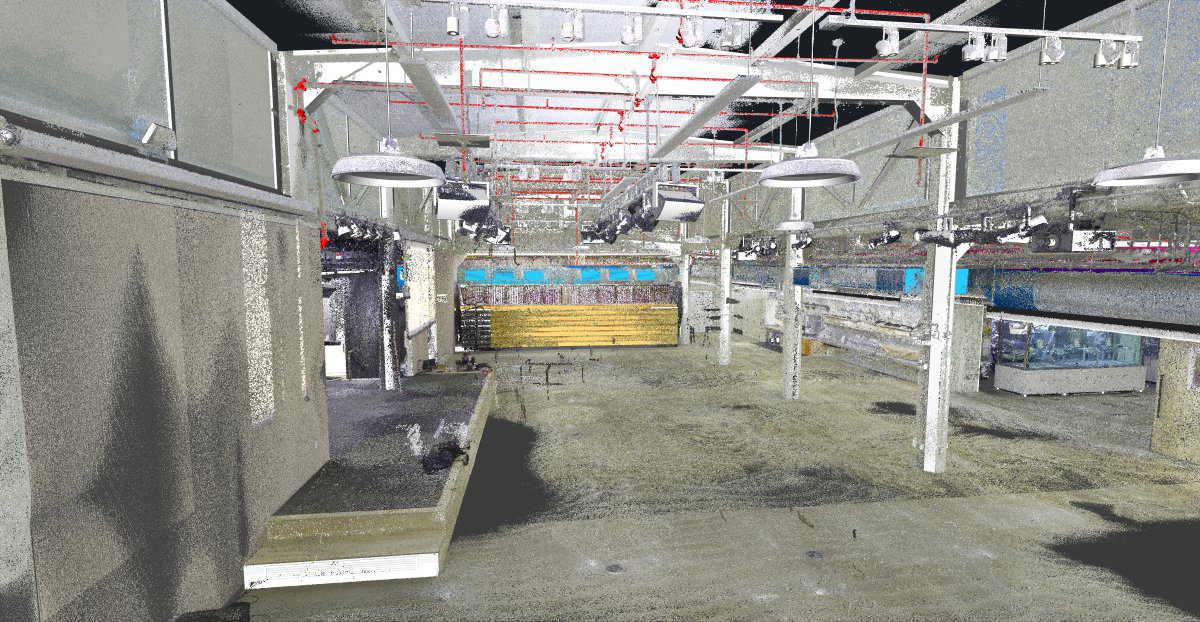
Field work (site capture) This is the time spent on-site running a Leica RTC360 or Faro Focus scanner at multiple stations throughout the space. The scanner captures millions of precise data points per second, producing a complete spatial record of existing conditions. Field work typically represents 20–40% of total project cost.
Data processing Raw scan data must be registered (aligned across all scan positions), cleaned, and converted into a usable point cloud. This technical step requires specialized software and expertise. Processing typically represents 15–25% of total project cost.
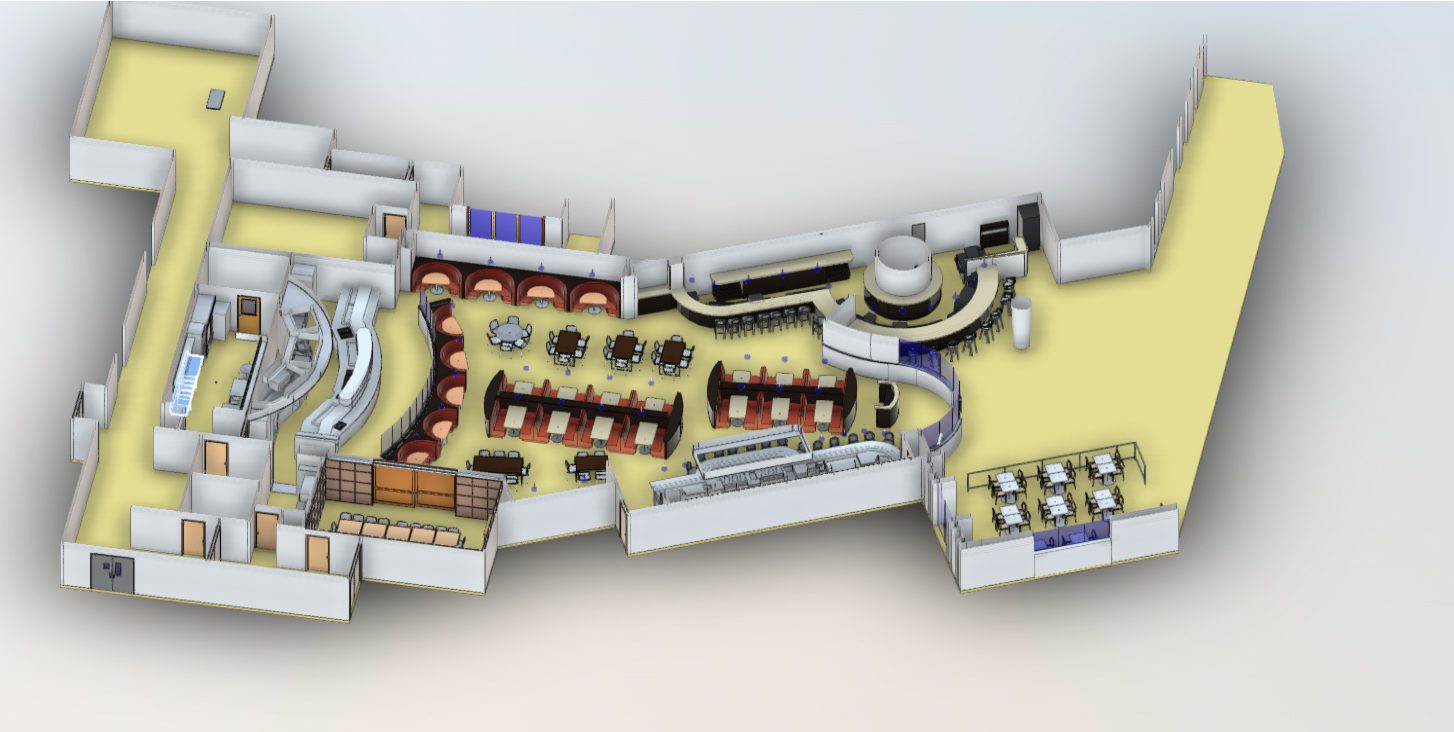
CAD / BIM production This is the drafting and modeling phase — where the point cloud becomes a deliverable drawing set. The complexity of the space, the number of drawing sheets, and the deliverable format all affect hours and cost. CAD/BIM production typically represents 40–60% of total project cost.
Quality control and delivery Professional firms include a QC review against point cloud data before delivering final drawings. This step is often skipped by lower-cost providers — and it’s one of the primary reasons low quotes produce drawings that don’t hold up in the field.
What Drives the Cost Up
Several project variables consistently push as-built drawings cost toward the higher end of the range:
→ Multiple floors — Each floor adds scan positions, data processing time, and CAD/BIM production. Multi-story buildings are priced per floor or per total SF.
→ Exposed MEP systems — Spaces with exposed ceilings require documentation of mechanical, electrical, and plumbing systems. Routing and labeling each system element adds significant drafting time.
→ Irregular or complex geometry — Non-orthogonal walls, vaulted ceilings, curved facades, and historic structures all add complexity to field capture and CAD production.
→ High LOD Revit deliverables — A Revit model at LOD 300+ takes substantially more time to produce than a flat 2D CAD drawing set. If BIM deliverables are required, that requirement should be stated clearly in the RFP.
→ Compressed turnaround — Rush delivery (under 3 business days) typically carries a 25–50% premium depending on project size and provider capacity.
→ Remote or difficult-access locations — Projects outside a provider’s primary market, properties with limited access hours, or sites with complex security requirements add logistics cost.
→ Large format or historic properties — Buildings over 100,000 SF or historic structures requiring measured drawings for preservation purposes involve specialized workflows and extended timelines.
What Drives the Cost Down
Conversely, several factors allow professional firms to offer competitive pricing:
→ Simple, regular geometry — Open-plan retail boxes, warehouse spaces, and modern office suites with orthogonal layouts scan and draft quickly.
→ Single-floor properties — Single-story buildings eliminate the complexity of vertical stacking and inter-floor coordination.
→ Flexible turnaround — Standard 5–10 business day delivery windows allow for efficient scheduling and workflow batching.
→ Proximity to a service market — Providers with established presence in a market reduce mobilization costs significantly. For LiDAR Precise Plans, this includes Las Vegas, Phoenix, Los Angeles, San Francisco, Denver, Salt Lake City, and Austin.
→ PDF-only deliverables — When a client needs accurate documentation but doesn’t require editable CAD files, PDF deliverables reduce production time.
Why 3D Laser Scanning Is the Standard for Commercial As-Built Documentation
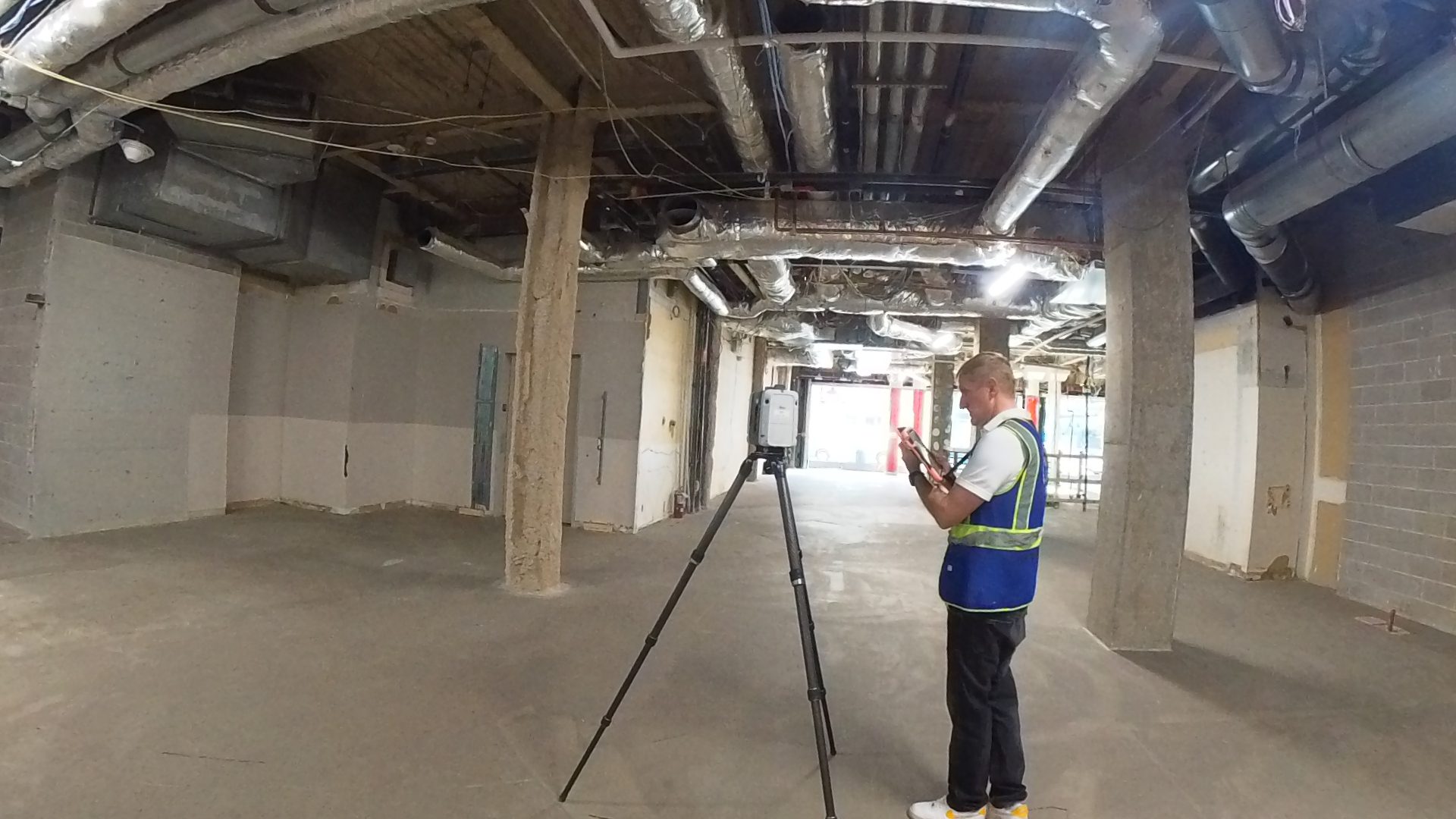
Some providers still use hand measurement — tape measures, laser distance meters, and field notes — to capture existing conditions. For commercial projects, this approach carries meaningful risk. Accuracy on hand-measured projects typically runs ±¼” to ½” on simple spaces and degrades significantly on complex geometry. On large multi-room spaces, measurement errors compound. The field notes are discarded after drafting, leaving no data asset to reference for future work.
3D laser scanning eliminates these variables. A Leica RTC360 or Faro Focus scanner captures millions of points per second at ±1–3mm accuracy, producing a complete spatial record of the space in a single pass. That record — the point cloud — becomes a permanent data asset. Every wall location, ceiling height, structural element, and MEP component is verifiable against the original scan data.
For commercial properties where as-built drawings will feed renovation design, permitting, or BIM coordination, the accuracy difference isn’t theoretical. It shows up as change orders — or the absence of them.
The Real Cost of Getting It Wrong
The focus in most RFP and procurement conversations is on the cost of the documentation. The more important number is the cost of inaccurate documentation — and that number is almost always larger.
A set of as-built drawings with a 6-inch wall location error in a 10,000 SF retail buildout can produce a millwork package that doesn’t fit, a ceiling grid that doesn’t coordinate, and a day or more of on-site rework. A single change order on a commercial construction project typically runs $2,000–$10,000 depending on scope and trade. One significant discrepancy between the as-built drawings and field conditions can cost more than the entire documentation project.
The cost for as-built drawings should be evaluated against the cost of the downstream decisions those drawings inform — not just against the lowest competing quote in the RFP.
At LiDAR Precise Plans, we regularly work with clients who come to us after a lower-cost documentation vendor delivered drawings that didn’t hold up in the field. In almost every case, the cost of the rework — change orders, redesign fees, and construction delays — exceeded what it would have cost to do the documentation right the first time.
Questions to Ask Before You Hire an As-Built Documentation Firm
Not all as-built quotes are for the same product. Before accepting a proposal, ask:
→ What is the field capture method? Is the firm using 3D laser scanning? If so, which scanner (Leica, Faro, Matterport) and what is the stated accuracy?
→ What software is used for CAD/BIM production? AutoCAD and Revit are the industry standards. Unfamiliar platforms or workarounds are a red flag.
→ What is included in the drawing set? Floor plan only? Full architectural set? MEP overlay? Reflected ceiling plan? Get a specific list of deliverable sheets.
→ What file formats are delivered? PDF only, or editable DWG/RVT files? Editable CAD files are essential if the drawings will be used for renovation design.
→ What is the QC process? How does the firm verify that drawings match field conditions before delivery? Are drawings checked against the point cloud?
→ What is the turnaround timeline? And is there a rush fee if you need delivery sooner?
→ Do you have experience with this building type? Commercial, retail, hospitality, historic, and industrial properties each have documentation nuances that generalist providers sometimes miss.
📐 Want a Specific Quote for Your Property?
LiDAR Precise Plans provides 3D laser scanning and professionally documented as-built drawing sets for commercial properties across Las Vegas, Phoenix, Los Angeles, San Francisco, Denver, Salt Lake City, and Austin. Every project is quoted based on your actual space — not generic per-SF formulas. Fast turnaround. CAD, PDF, and Revit deliverables available.
→ Get a Quote: https://lidarasbuiltdrawings.com/as-built-drawings/