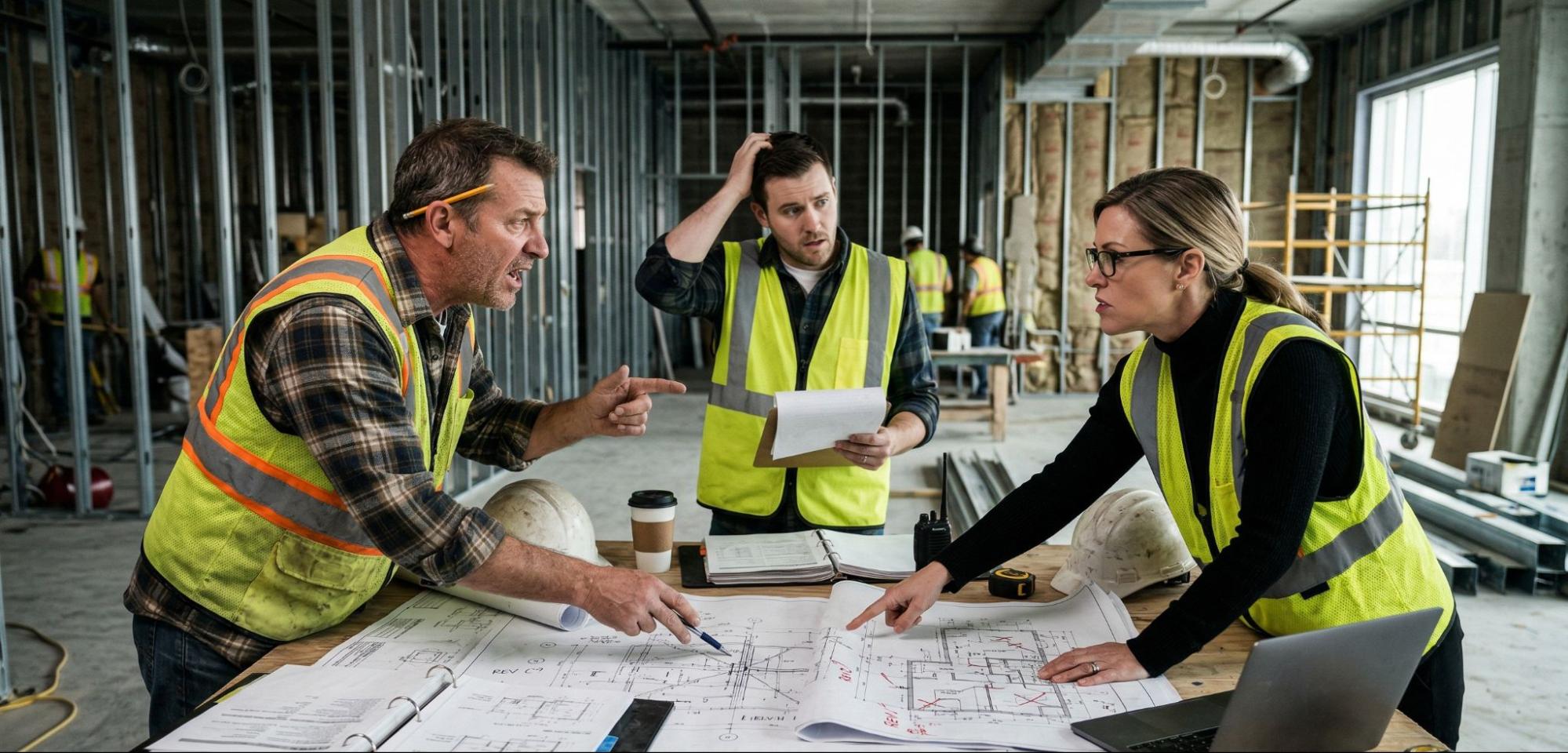

Here’s the thing nobody tells you about construction projects: the drawings you start with are almost never the drawings that match what ends up built.
Walls shift. Pipes get rerouted. A structural element lands three inches from where the plans said it would. By the time a commercial project wraps up, the original blueprints are essentially a work of historical fiction.
That gap between what was planned and what actually exists? That’s exactly what as-built drawings fix. And if you’ve ever paid for a renovation that blew the budget because “nobody knew where that pipe was” — you already understand why they matter.
QUICK ANSWER
As-built drawings are revised construction documents that show how a building was actually built — not how it was originally designed. They capture every real-world change made during construction: shifted walls, rerouted systems, adjusted dimensions. The result is an accurate record of the structure as it physically exists today.
The Blueprint Lie (And Why As-Built Drawings Exist)
Let’s say you’re a facility manager at a major retail chain. You have 40 locations across the Southwest. A designer needs to plan a tenant improvement at your Phoenix store. She pulls up the original construction drawings from 2009 — and she trusts them.
Six weeks later, demo day arrives. The contractor opens a wall and finds the electrical panel is 14 inches from where the drawings show it. The HVAC duct runs directly through the planned opening. The floor drain is in the wrong room entirely.
Sound familiar? That scenario plays out on commercial projects every single day. The original drawings didn’t lie on purpose; construction just happened, and nobody tracked the changes.
As-built drawings exist for one reason: so that the next person who works on the building doesn’t have to guess. . A professional as-built drawings service ensures those conditions are accurately documented before renovation begins.
The Exact Definition of As-Built Drawings
Formally defined: as-built drawings are construction documents that have been revised and annotated to reflect all modifications, substitutions, and deviations made during the construction process — accurately representing the physical conditions of the completed building or facility.
That’s the textbook version. In plain English: they’re the drawings that show where everything actually is right now.
They typically cover:
→ Floor plans (walls, doors, dimensions as built)
→ Reflected ceiling plans
→ Mechanical, electrical, and plumbing (MEP) systems
→ Structural elements
→ Site conditions, elevations, and exterior details
As-Built Drawings vs. Record Drawings — Is There a Difference?
Sort of, but not really in practice. Here’s the technical distinction:
Record drawings are typically prepared by the architect after construction, incorporating contractor-provided markups into a clean, professional set. As-built drawings is a broader term that can include rough contractor red-lines all the way to fully drafted CAD documents.
In day-to-day commercial work, most owners, PMs, and architects use the terms interchangeably — and what they all want is the same thing: accurate documentation of how the building exists right now.
Pro tip: if someone hands you “as-built drawings” that are just the original blueprints with a few handwritten notes scrawled on them, ask for better documentation. Those are not reliable.
Who Actually Needs As-Built Drawings?
The short answer: anyone who touches a building after it’s been built.
Property owners and portfolio managers need them before planning any renovation or tenant improvement. Without them, every construction bid is a shot in the dark.
Architects and designers need them to produce new construction documents. Designing in a vacuum — without accurate existing conditions — is how you end up with change orders.
General contractors and subcontractors need them to plan their scopes accurately. Knowing where that electrical panel actually sits saves time, money, and a lot of frustration.
Facility managers need them for ongoing maintenance. When something breaks inside a wall, you want to know exactly where it is before you start cutting.
Leasing teams and real estate professionals use them to verify actual square footage — especially important when rent is calculated per square foot.
While commercial renovations often drive demand for as-built documentation, residential remodels and additions benefit just as much — especially in older homes where original plans are missing or inaccurate. Accurate existing conditions reduce surprises during kitchen remodels, additions, and structural upgrades.
How As-Built Drawings Are Made (The Old Way vs. The Right Way)
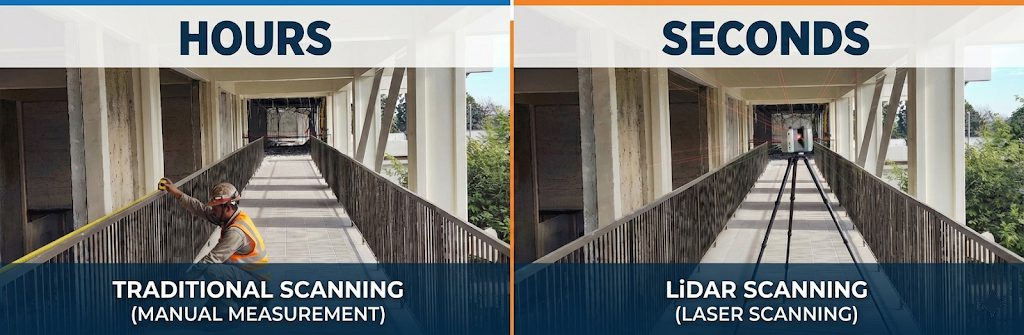
often within 1/8 inch across spaces of 50,000 square feet orFor decades, as-built drawings were created the hard way: a contractor would carry paper blueprints to the job site, mark changes in red pen as the project progressed, and at the end hand that redlined set to the architect to redraw in CAD. It was slow, incomplete, and as accurate as whoever remembered to write things down.
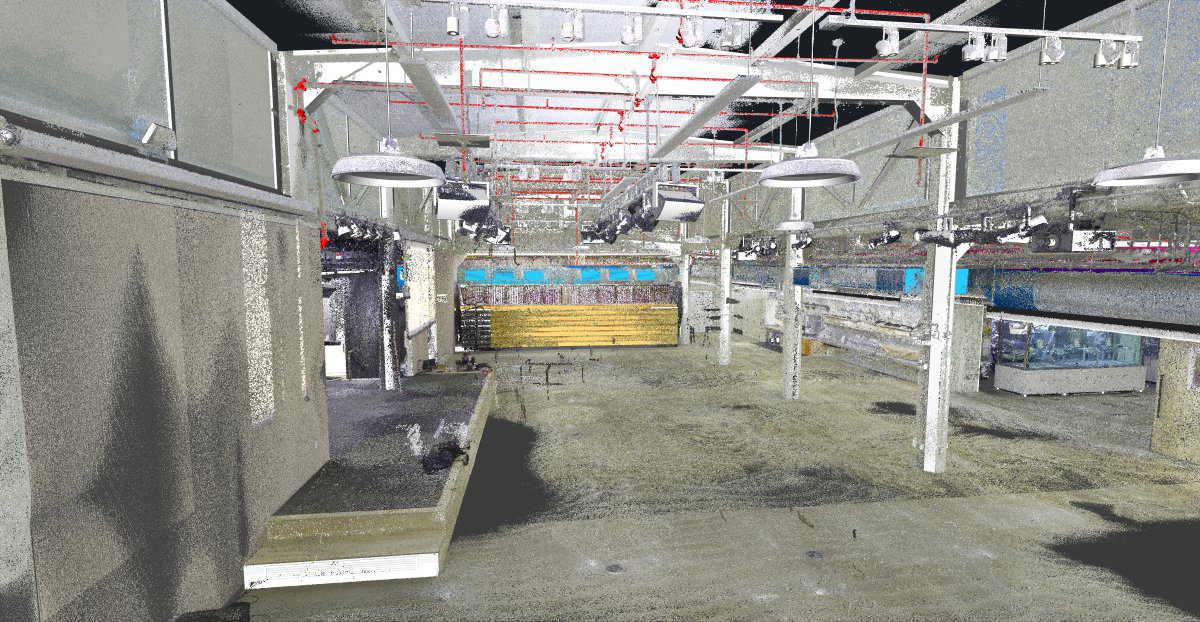
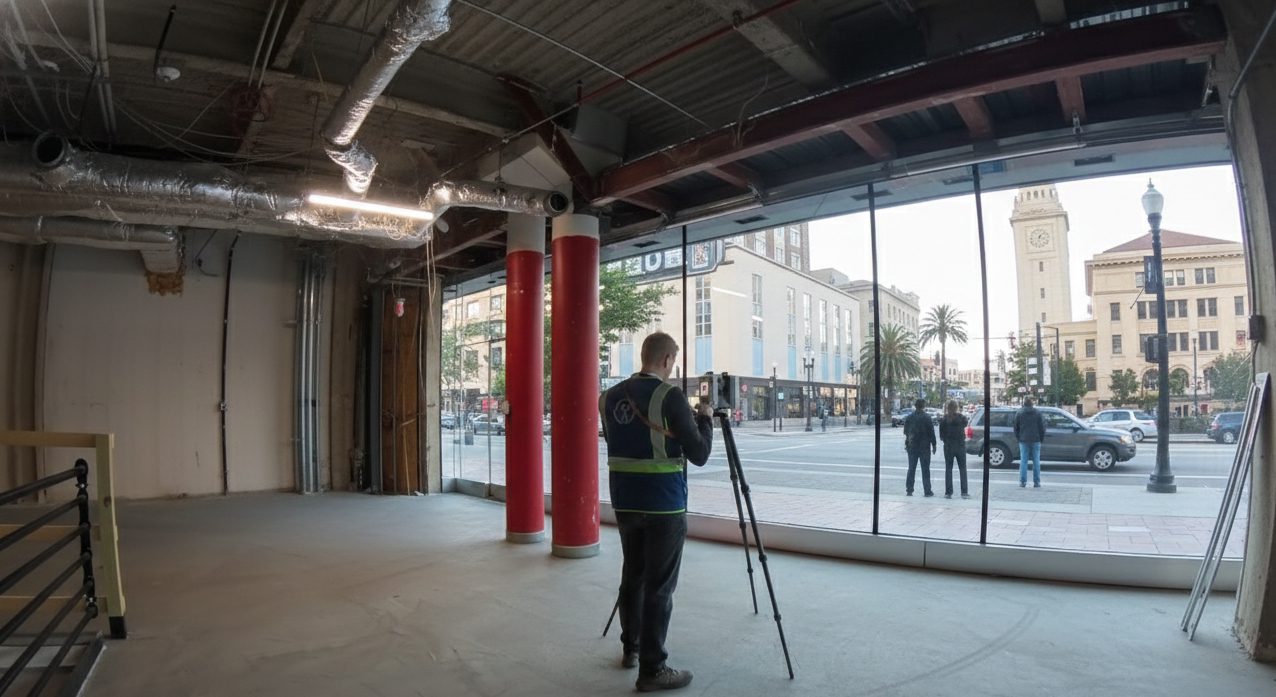
Today, the best as-built documentation starts with 3D laser scanning — specifically LiDAR (Light Detection and Ranging) technology. A LiDAR scanner fires millions of laser pulses per second and measures the return time with extreme precision, building a full 3D point cloud of the entire space.
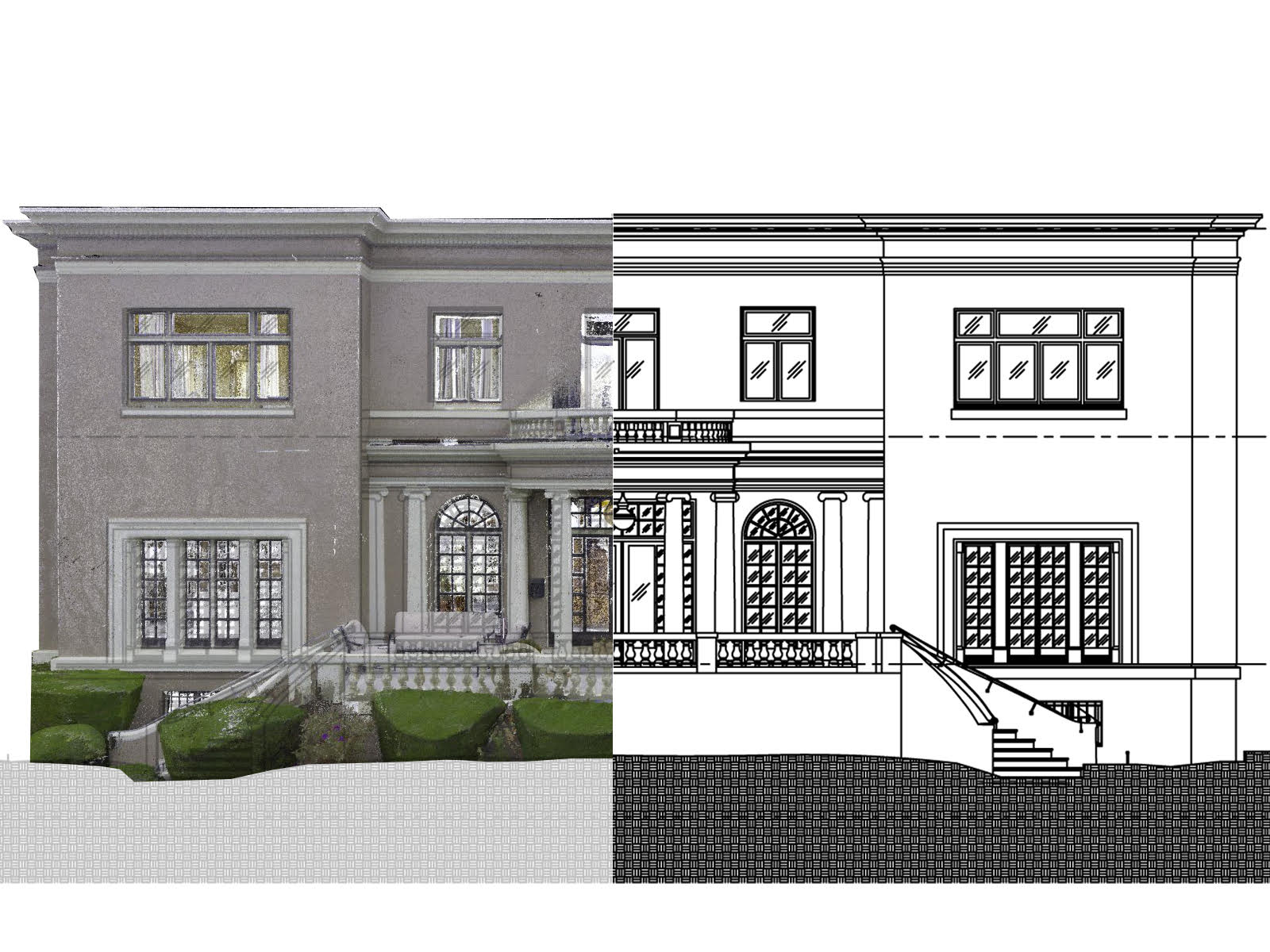
That point cloud is then used to produce as-built drawings in AutoCAD or Revit with sub-inch accuracy — more. What used to take weeks of manual field measuring takes days. And the accuracy isn’t even close.
Typical field tolerances for professional laser-scanned as-built documentation range between ±3–5mm depending on site conditions and equipment used. That level of precision significantly reduces coordination conflicts during renovation and construction.
At LiDAR Precise Plans, every as-built project starts with a full 3D laser scan. No guessing. No “I think that wall is about here.” Just precise documentation you can trust.
The Real Cost of Not Having Them
This is where it gets interesting — and expensive.
Studies in the construction industry consistently show that inaccurate or missing existing conditions documentation is one of the top drivers of project change orders. For a $500,000 tenant improvement, even a 10% change order impact is $50,000 you didn’t plan for.
Beyond change orders: permit delays, scope creep, contractor disputes, and the gut-punch of demo day surprises are all downstream effects of working without accurate as-built drawings.
The cost of professional as-built documentation? Typically a fraction of one percent of your project budget. The cost of not having it? Ask anyone who’s been through a renovation nightmare.
📐 Need As-Built Drawings for a Commercial Project?
LiDAR Precise Plans delivers 3D laser scan-to-CAD as-built documentation for commercial properties across Las Vegas, Phoenix, Los Angeles, San Francisco, Denver, Salt Lake City, and Austin. With 27 years of architectural experience and sub-inch LiDAR accuracy, we give owners, architects, and facility teams documentation they can actually trust.→ See our As-Built Drawings Service at lidarasbuiltdrawings.com