
Most people in construction know what as-built drawings are. Fewer people have a clear picture of every situation where they become essential — and how expensive it gets when they’re missing at exactly the wrong moment.
The answer isn’t just closeout documentation. Construction as-built drawings show up across the entire lifecycle of a building: during design, during renovation, at permit, during a sale, and throughout the years of facility operation that follow. Understanding the common use cases helps owners, GCs, architects, and project managers make better decisions about when to commission documentation, what to ask for, and what level of accuracy is actually required for the job at hand.
This guide covers the most frequent real-world situations where construction as-built drawings are needed, what each use case requires, and what happens when the documentation isn’t there.
Quick Answer: What Are Construction As-Built Drawings Used For?
Construction as-built drawings are used across six primary scenarios: pre-renovation design and planning, building permit submittals, tenant improvement buildouts, facility management and operations, commercial real estate transactions, and MEP system documentation for ongoing maintenance. In each case, the drawings serve as the verified baseline of existing conditions — what’s actually inside the walls, above the ceiling, and below the slab. When accurate as-built documentation exists, each of these processes runs faster and with fewer surprises. When it doesn’t, the cost shows up in change orders, permit delays, and field conflicts.
Need foundational context first? See: What Are As-Built Drawings in Construction? — a full breakdown of what these documents are and how they’re produced.
Use Case 1: Pre-Renovation Design and Planning
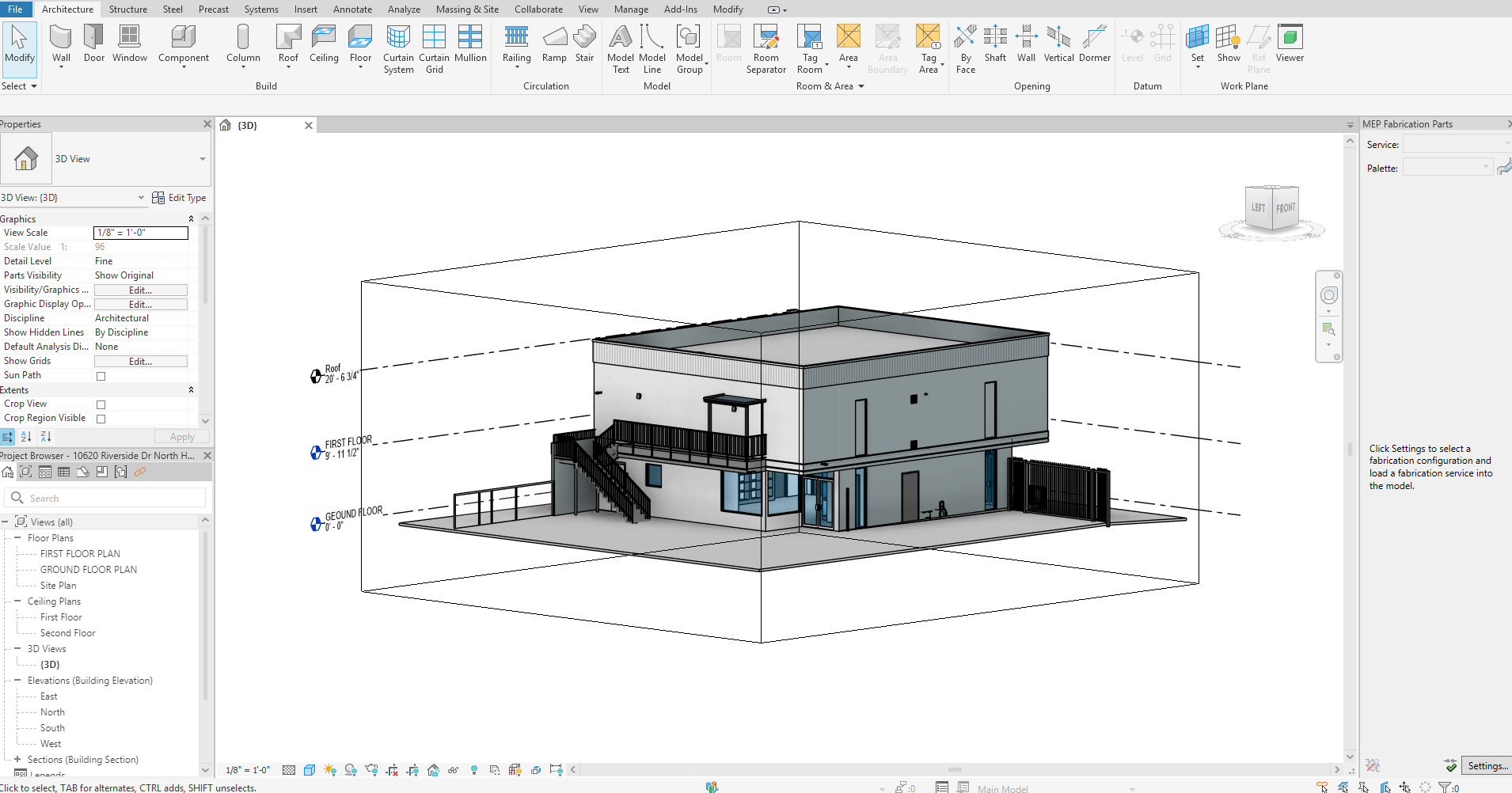
This is the most common trigger for commissioning as-built drawings on an existing building, and the one with the clearest ROI calculation.
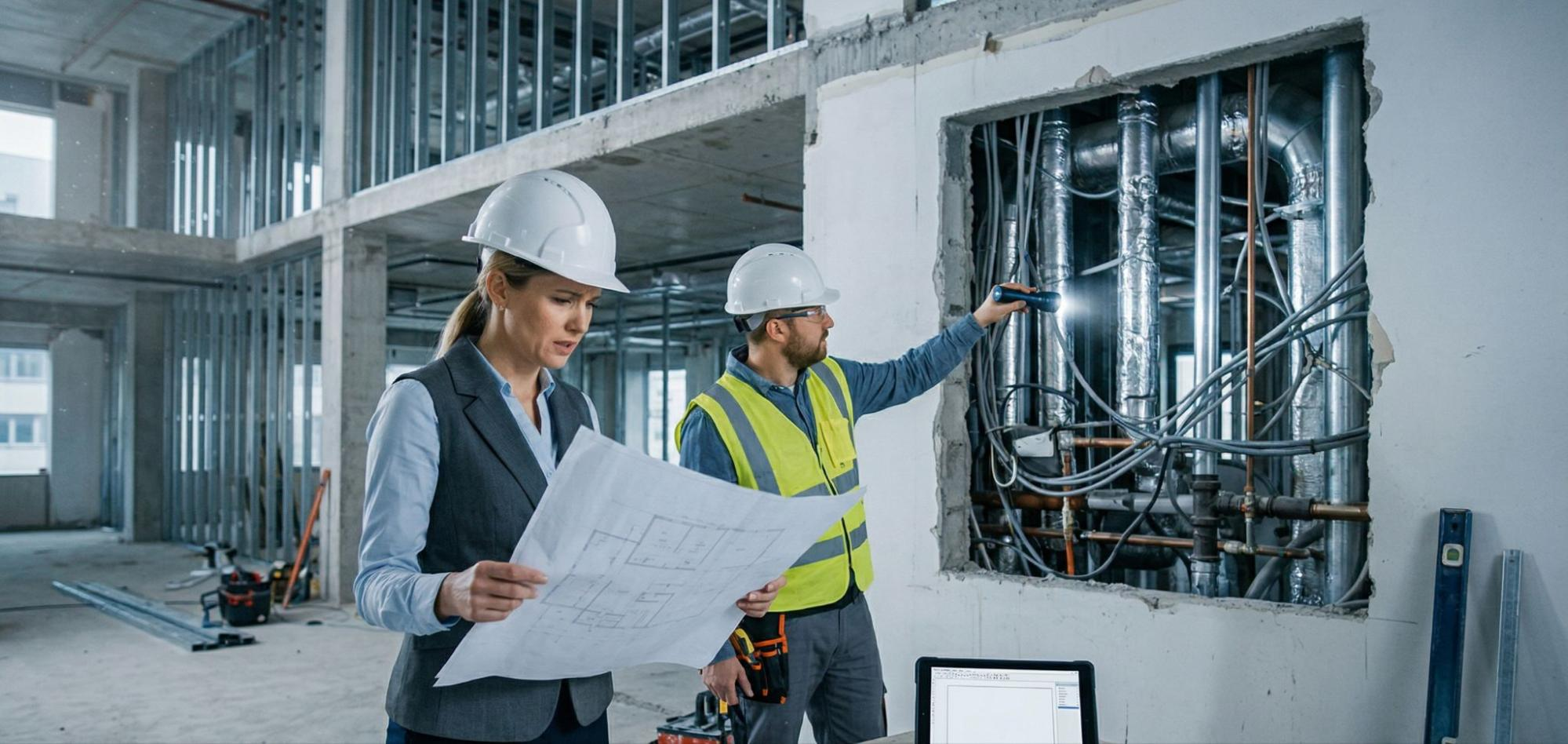
Before any renovation design begins, the architect needs to know the exact current conditions of the space — wall locations, ceiling heights, structural elements, MEP routing, slab conditions. If they design from original construction documents without verifying that those documents reflect what’s actually there, the renovation drawings will contain errors. Those errors surface during construction, when a contractor opens a wall and finds conditions that don’t match the design.
Field conflicts on active construction projects are expensive. An RFI gets filed. The architect reviews. A redesign may be required. A change order gets negotiated. Schedule slips. The cost of resolving a single significant field conflict almost always exceeds the cost of commissioning accurate as-built documentation before design begins.
Commercial buildings are especially prone to this problem. A building that’s been through multiple tenant improvement cycles over 20 or 30 years may have interior conditions that bear no resemblance to the original construction documents. Partitions have been added and removed. MEP systems have been modified. Ceilings have been dropped, raised, or reconfigured. The original drawings exist but reflect a building that no longer exists.
the majority of our pre-renovation projects start with professional as-built drawings services commissioned by architects and project managers who have learned — usually from a previous project — what it costs to discover field conditions don’t match the drawings after construction has started.
Related:As-Built Drawings Procedure: Here’s Exactly How It Works, Step by Step — covers exactly how the documentation process unfolds from site scan through CAD delivery.
Use Case 2: Building Permit Submittals

Many jurisdictions require as-built documentation as part of the permit application process for work on existing buildings. This requirement exists because the authority having jurisdiction needs to understand existing conditions in order to review the proposed work — and because permits create a record of the building’s condition at the time work was approved.
For tenant improvement permits, accurate 3D laser scanning produces existing condition documentation that speeds the approval process. For change-of-use permits, existing MEP documentation may be required to demonstrate code compliance. For work affecting the building envelope or structural systems, existing condition drawings are often required to support the structural analysis.
Even when as-built drawings aren’t formally required by the jurisdiction, submitting accurate documentation of existing conditions alongside permit drawings tends to reduce plan check comments and speed the approval process. Plan checkers who can verify that the proposed work is based on accurate existing conditions have fewer reasons to issue correction notices.
When permit submittals are based on outdated or inaccurate existing condition drawings, the results are plan check comments that require additional investigation, resubmittal delays, and in some cases, conditions of approval that require field verification after permit issuance.
Use Case 3: Tenant Improvement Buildouts
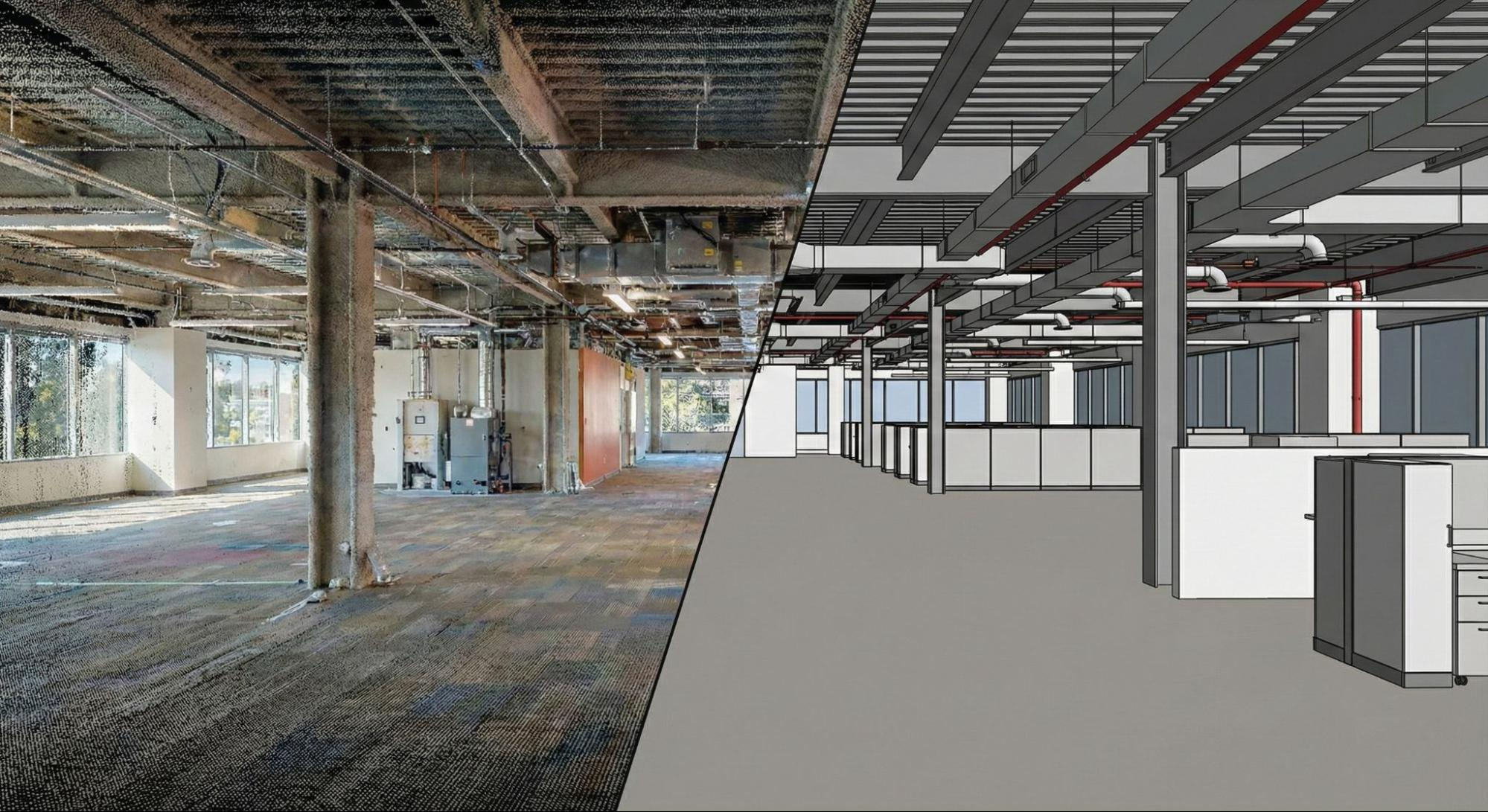
Commercial tenant improvement projects — office build-outs, retail fit-outs, restaurant conversions, medical office renovations — are among the highest-volume use cases for construction as-built drawings. And they’re among the situations where documentation gaps create the most consistent problems.
A tenant signs a lease. The landlord delivers the space in shell condition, or in second-generation condition with existing improvements from the prior tenant. The incoming tenant’s architect begins design. The question is: what are they designing from?
In shell condition spaces, the architect needs accurate documentation of the base building — structural grid, MEP stub-outs, ceiling heights, floor-to-floor dimensions, slab conditions. In second-generation spaces, they need documentation of whatever the prior tenant left behind — existing partitions, existing MEP systems, existing ceiling conditions — so they can determine what to demo and what to reuse.
When that documentation doesn’t exist or can’t be trusted, architects either commission their own field verification or design with assumptions. Assumptions generate change orders. Field verification, done properly with 3D laser scanning, generates reliable documentation — or teams can opt for complete scan to CAD drawings that the entire project team can design and build from.
Landlords who maintain current as-built documentation for their commercial properties reduce tenant improvement costs, speed lease execution, and reduce the friction that comes from tenants discovering mid-design that the building doesn’t match the drawings they were given.
Use Case 4: Facility Management and Building Operations

Once a building is occupied and operational, as-built drawings shift from a construction tool to an operations tool. Facility managers and building operations teams rely on them for a range of day-to-day and long-term decisions.
Locating building systems. When an HVAC unit fails or a pipe needs repair, the maintenance team needs to know where the equipment is, how it’s connected, and where the shutoffs are. Without accurate MEP documentation, locating a specific piece of equipment or a specific valve can require opening ceilings and walls to trace systems manually — a time-consuming and disruptive process.
Planning maintenance access. Preventive maintenance programs depend on knowing where equipment is located and how to reach it. Facilities teams that work from accurate as-built drawings plan maintenance routes, access requirements, and scheduling more efficiently than those working from memory or outdated drawings.
Managing capital improvements. When a major building system reaches end of life and needs to be replaced, accurate documentation of the existing system — its routing, its connections, its interaction with other building systems — is essential for planning the replacement without disrupting operations.
Responding to incidents. When a water line fails, a fire suppression system activates, or an electrical fault occurs, the speed of response depends on knowing where systems are and how they’re connected. Buildings with accurate as-built documentation resolve incidents faster and with less collateral damage.
Facility managers who inherit a building without current as-built documentation frequently commission a full point cloud services scan as one of their first priorities — not because a specific project requires it, but because operating a building without knowing what’s in it is an ongoing liability.
Use Case 5: Commercial Real Estate Transactions
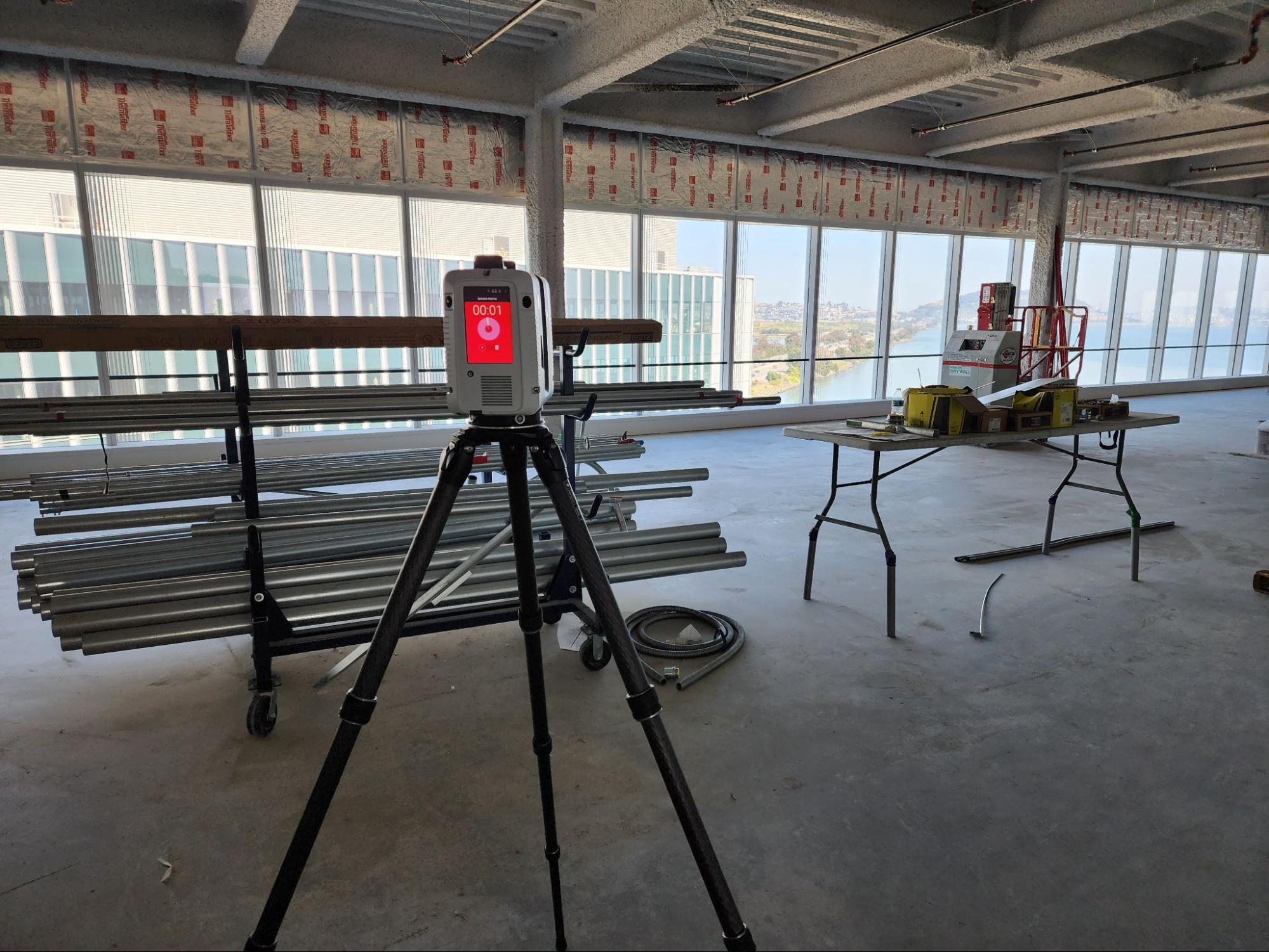
As-built drawings are standard due diligence documentation in commercial real estate acquisitions. Buyers, their lenders, and their consultants need to understand what they’re acquiring — the building’s actual configuration, systems, and conditions — before the transaction closes.
For buyers, accurate as-built documentation reduces the risk of discovering significant condition issues after acquisition. For lenders, it supports the appraisal process and confirms that the property described in the loan application matches the physical asset. For tenants evaluating a space before signing a long-term lease, current floor plans and MEP documentation inform their buildout planning and cost estimates. Buyers frequently commission their own documentation including complete scan to BIM models that support both immediate due diligence and future renovation planning.
When as-built drawings don’t exist or haven’t been updated since original construction, buyers frequently commission their own documentation as part of the due diligence process. This is increasingly done through 3D laser scanning rather than traditional field survey, because the resulting documentation is more accurate, more complete, and deliverable in a format that supports both immediate due diligence needs and future renovation planning.
Buildings that go to market with current, accurate as-built documentation move through due diligence faster, generate fewer condition-related renegotiations, and present as better-managed assets to sophisticated buyers.
Use Case 6: MEP Documentation for Ongoing Maintenance
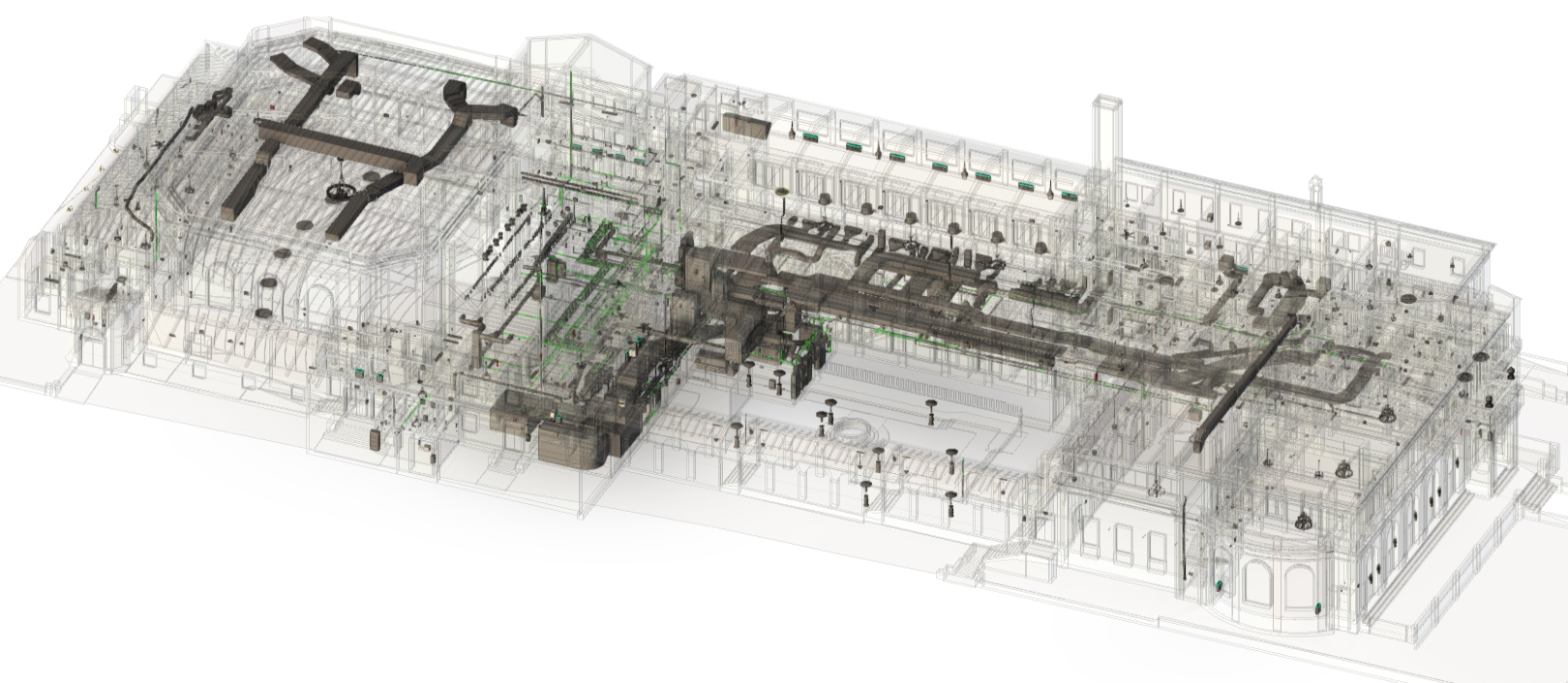
Mechanical, electrical, and plumbing systems are among the most complex and valuable components of a commercial building. They’re also the systems most frequently modified — by tenant improvements, system upgrades, code compliance work, and emergency repairs — and the systems most likely to be poorly documented over time.
Every time a subcontractor modifies an MEP system without updating the as-built documentation, the drawings become less reliable. After a decade of incremental modifications, the original MEP drawings may reflect systems that no longer exist, routed differently than shown, or replaced with different equipment entirely.
Recommissioning accurate MEP as-built documentation — through a field scan that captures current duct routing, pipe runs, conduit paths, equipment locations, and panel configurations — gives the operations team a reliable baseline for maintenance planning, system upgrades, and emergency response.
This use case is particularly common after building acquisitions, after major renovation projects, and as part of sustainability or energy efficiency initiatives where understanding existing system performance requires accurate system documentation.
Ready to commission as-built drawings for your building? See:How to Get As-Built Drawings (From a Professional Provider) — a complete guide to the process, timeline, and what to expect.
What Accurate Documentation Actually Costs vs. What Bad Documentation Costs
There’s a consistent pattern in how owners and project managers think about as-built drawings: they look like a cost until they’re missing, at which point they look like a bargain.
A professional LiDAR-based as-built survey for a commercial space typically runs a fraction of what a single significant field conflict costs to resolve on an active construction project. The cost of a change order caused by field conditions that don’t match the design drawings — engineering review, redesign time, contractor markup, schedule impact — routinely exceeds the cost of the documentation that would have prevented it.
Across all of the use cases above, the pattern is the same. Accurate as-built documentation costs money upfront. Missing or inaccurate documentation costs more later, at the worst possible time.
Wondering what as-built documentation actually costs for your project? See: As-Built Drawings Cost: Factors, Ranges & What to Expect — a full breakdown of what drives pricing and typical ranges by project type and square footage.
Summary: Construction As-Built Drawings Common Use Cases
Construction as-built drawings serve a specific function across six consistent scenarios: pre-renovation design, permit submittals, tenant improvement buildouts, facility operations, real estate transactions, and MEP system maintenance. In every case, the drawings do the same job — they tell the people making decisions what the building actually looks like, right now, verified from field conditions rather than from assumptions.
The buildings that are easiest to renovate, fastest to permit, simplest to operate, and most straightforward to transact are the ones with current, accurate as-built documentation. That documentation doesn’t happen by accident. It requires deliberate commissioning, a reliable method for capturing field conditions, and a provider capable of delivering documentation that your entire project team can actually build from.
LiDAR Precise Plans produces field-verified as-built documentation for commercial properties across Las Vegas, Phoenix, Los Angeles, San Francisco, Denver, Salt Lake City, and Austin. Every project starts with a professional-grade 3D laser scan — not old blueprints or guesswork — and is delivered in AutoCAD, Revit, and PDF formats with two-person QA and a fixed-price proposal returned in 24 hours.
→ Learn more about our As-Built Drawings Service → See As-Built Drawings Cost: Factors + Ranges → Get a free quote — returned within one business day888-543-2711
Related Reading:
- What Are As-Built Drawings in Construction?
- As-Built Drawings Procedure: Here’s Exactly How It Works
- Who Is Responsible for As-Built Drawings?
- As-Built Drawings Cost: Factors, Ranges & What to Expect
Frequently Asked Questions:
What are the most common uses for construction as-built drawings?
The six most common use cases are: pre-renovation design and planning, building permit submittals, tenant improvement buildouts, facility management and operations, commercial real estate due diligence, and MEP system documentation for ongoing maintenance. Each use case requires accurate field-verified documentation of existing conditions — what’s actually built, not what was originally designed.
Do I need as-built drawings before starting a renovation?
Yes — commissioning as-built drawings before renovation design begins is one of the highest-value investments on a commercial project. Designing from inaccurate or outdated existing condition drawings consistently produces field conflicts, change orders, and schedule delays. Accurate pre-design documentation eliminates most of those surprises before they happen.
Are as-built drawings required for building permits?
Requirements vary by jurisdiction and project type. Many local building departments require existing condition drawings as part of tenant improvement and change-of-use permit applications. Even when not formally required, submitting accurate as-built documentation alongside permit drawings typically speeds plan check review and reduces correction notices.
How do as-built drawings help with facility management?
Facility managers rely on as-built drawings to locate building systems, plan maintenance access, manage capital improvements, and respond to incidents. Buildings with accurate as-built documentation resolve maintenance issues faster, plan system replacements more efficiently, and carry less operational risk than buildings with outdated or missing documentation.
Why do buyers request as-built drawings during a commercial real estate transaction?
As-built drawings are standard due diligence documentation in commercial acquisitions. Buyers need to understand the building’s actual configuration, systems, and conditions — not what was originally designed — before closing. Lenders require documentation to support appraisals. Accurate as-built drawings reduce due diligence friction and reduce the risk of post-acquisition condition surprises.
How often should as-built drawings be updated?
As-built drawings should be updated any time significant construction work modifies the building — tenant improvements, MEP system upgrades, structural modifications, or additions. Buildings that go through multiple improvement cycles without updating documentation accumulate condition gaps that become increasingly expensive to resolve when the next project begins.