
You pulled permits for a restaurant renovation three weeks ago. The contractor just called: the kitchen hood clearances on the drawings don’t match what’s in the ceiling. The MEP rough-in from a 2009 buildout is in a completely different location than the record drawings show. Now you’re looking at a change order, a delay, and a conversation with the owner nobody wants to have.
This is not a rare scenario. It is the default outcome when restaurant renovations start without verified documentation of existing conditions.
How LiDAR Prevents Expensive Restaurant Renovation Mistakes
LiDAR scanning for restaurant renovation documentation captures the exact physical state of a restaurant space, including walls, ceilings, MEP systems, structural elements, and equipment clearances, with verified accuracy of ±2 mm. The resulting point cloud converts directly into CAD drawings or Revit models that reflect what actually exists, not what was originally designed. For architects, contractors, and owners navigating restaurant TIs, rebrands, or full gut renovations, this eliminates the field conflicts and RFI cycles that drive up costs and delay openings. Learn how 3D laser scanning services eliminate guesswork from the first day of design.
Why Restaurant Spaces Are the Hardest Buildings to Document Accurately

Restaurants don’t age cleanly. A 15-year-old dining space has typically absorbed two or three tenant improvements, multiple equipment swaps, at least one hood system upgrade, and a code-driven accessibility modification somewhere along the way. Each of those changes left a physical mark, and almost none of them made it back into a coordinated set of record drawings.
The result is a documentation gap that catches renovation teams off guard every time. Architects request the existing drawings from the landlord or owner. The drawings come back stamped with a year that predates the last three buildouts. The design team works from them anyway, because there’s no budget line item for field verification, and the schedule doesn’t have room for a remeasure.
That decision costs money. Not sometimes. Consistently.
The compounding problem in food service spaces is the density of building systems in a relatively small footprint. A 3,500-square-foot restaurant might contain:
- A Type I commercial hood system with fire suppression, makeup air, and exhaust routing through the ceiling plenum
- A grease interceptor with a specific setback and access requirement
- Walk-in cooler and freezer boxes with dedicated electrical and refrigeration lines
- A compressed air system for the bar or espresso equipment
- Floor drains positioned to match health department requirements
- Structural supports added for heavy equipment that aren’t visible in the original drawings
Every one of these elements has a location, a clearance requirement, and a relationship to adjacent systems. Point cloud data captures all of it simultaneously, in a single scan session, without requiring the walls to come down first.
What LiDAR Scanning Actually Captures in a Restaurant Space
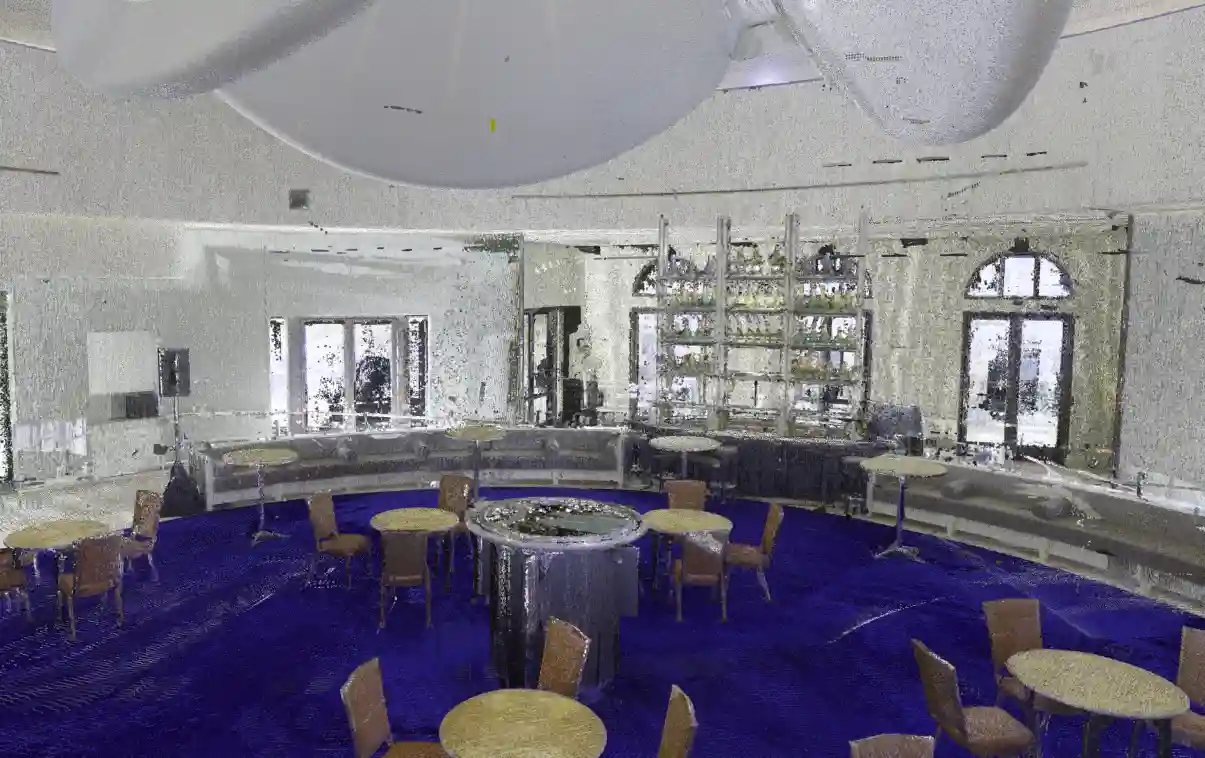
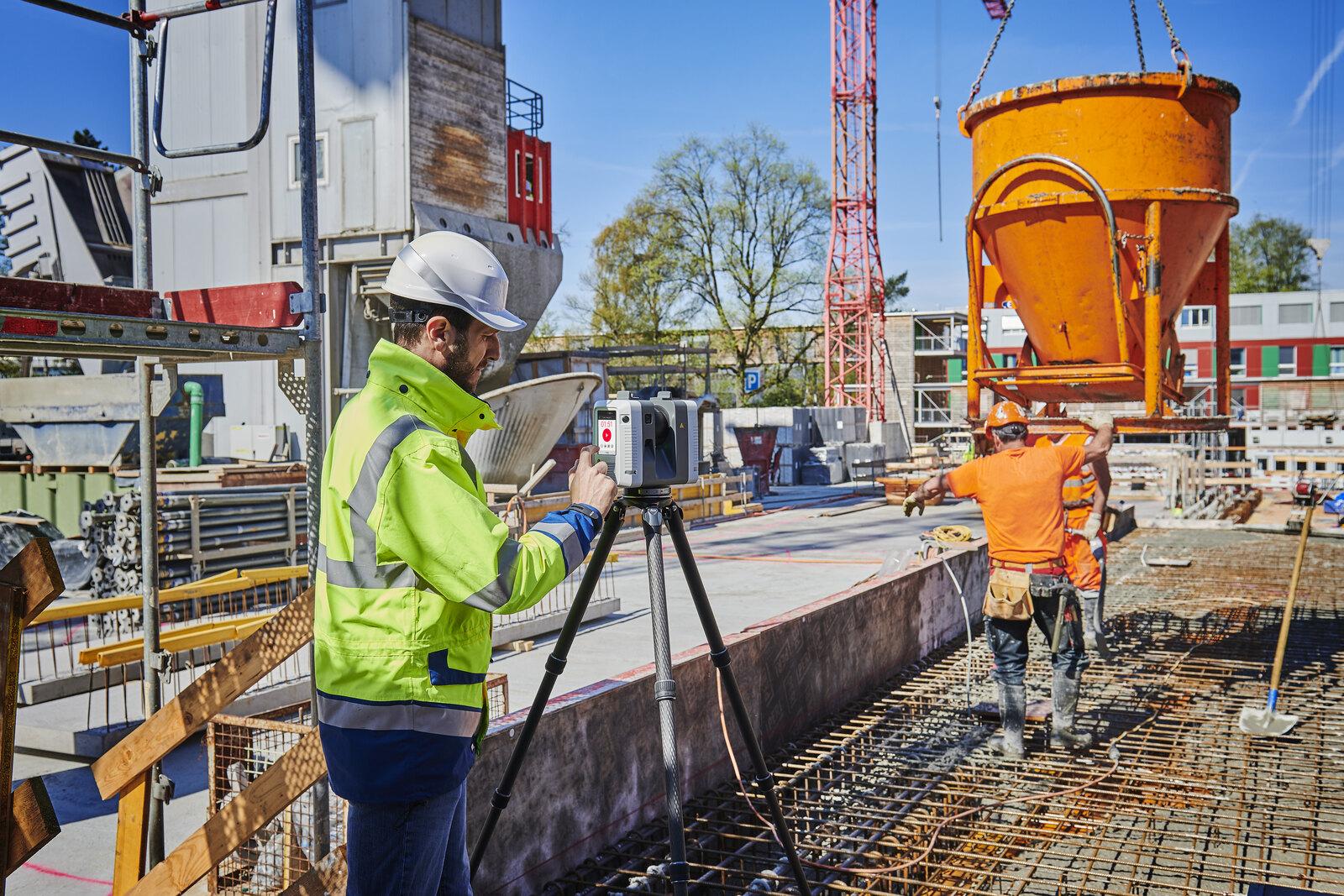
3D laser scanning works by emitting millions of laser pulses per second from a stationary scanner position, measuring the return time of each pulse to calculate precise distances to every surface in the room. The output is a point cloud: a dense three-dimensional map of the space accurate to plus or minus 2mm.
For restaurant renovation documentation, this means:
Architectural Conditions
Floor elevations, wall thicknesses, ceiling heights at every location, soffits, bulkheads, column positions and dimensions, door and window openings, and existing finishes all register in a single scan. If a floor has settled unevenly, the point cloud shows it. If a dropped ceiling has varied clearances that affect exhaust routing, that’s captured too.
MEP Systems
Exposed and semi-exposed ductwork, piping runs, conduit, electrical panels, gas lines, and plumbing stacks all appear in the scan data. For restaurant kitchens where MEP documentation is the difference between a coordinated design and a field conflict, this layer of data is the most valuable the scan produces. Review how MEP documentation services capture this detail for renovation projects.
Equipment Footprints and Clearances
Existing kitchen equipment can be included in the scan, giving designers accurate footprint data and verified clearance measurements before any equipment specifications are finalized.
Structural Elements
Visible steel, concrete columns, bearing walls, and beam locations all register in the scan. In older restaurant buildings where structural modifications weren’t always permitted or documented, this verification matters.
The scan session for a typical 3,000 to 5,000-square-foot restaurant takes two to four hours. The space can remain in operation during scanning in many configurations. Set-up disruption is minimal.
How the Scan Data Converts Into Renovation-Ready Deliverables
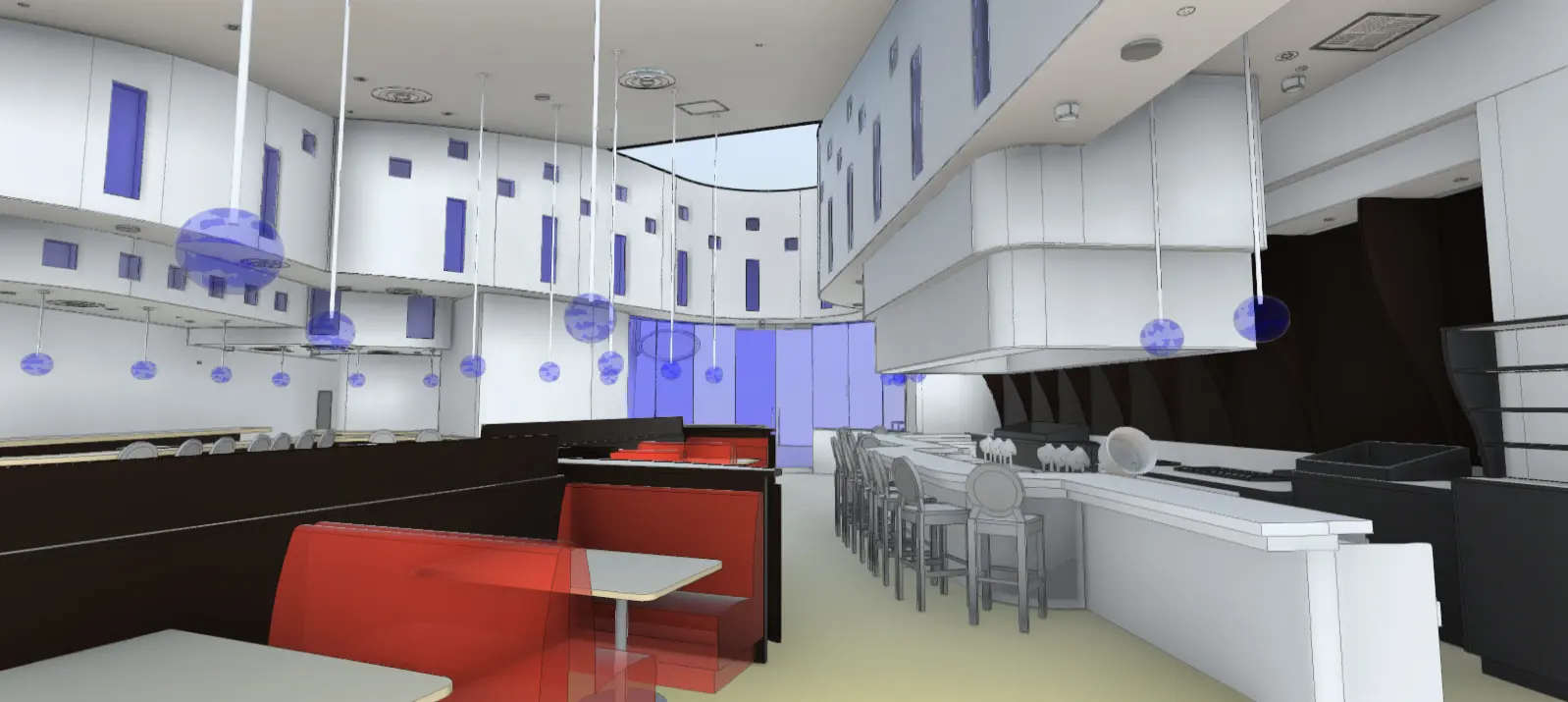
Raw point cloud data is the starting point, not the deliverable. What architects, engineers, and contractors actually work from are the drawings and models derived from that data.
As-Built CAD Drawings
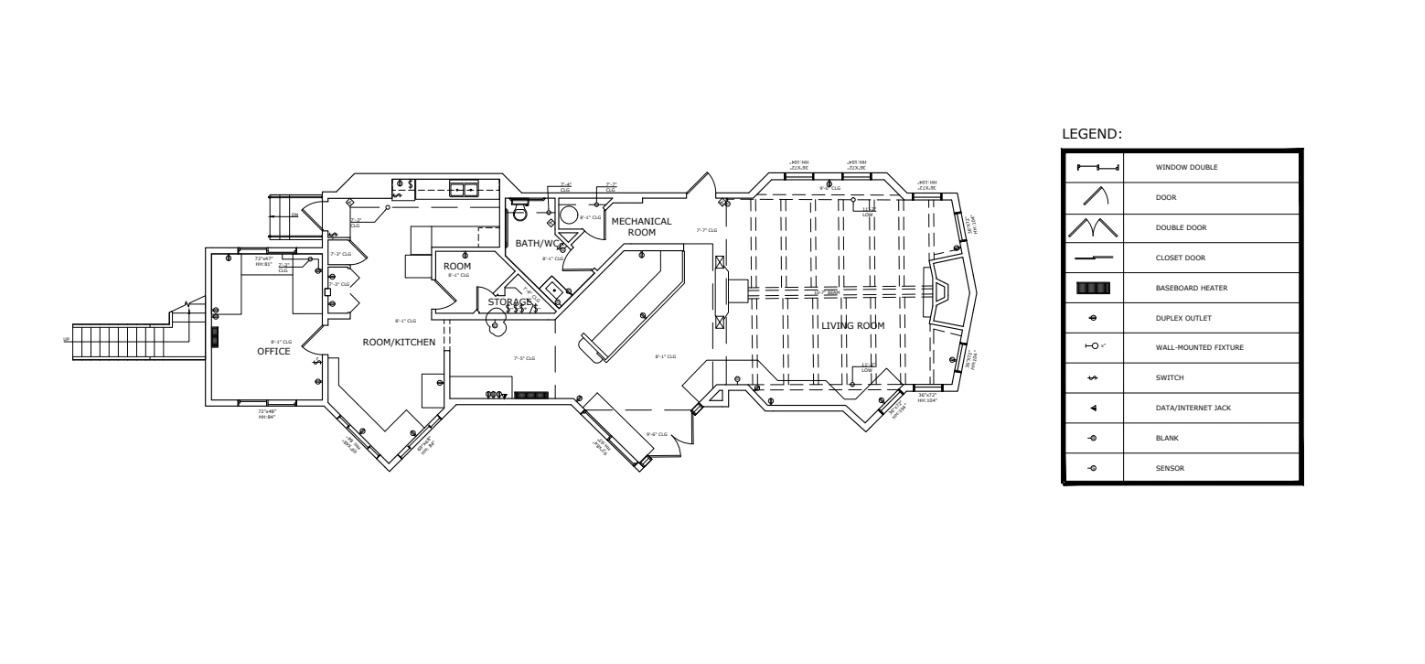
For projects using 2D documentation workflows, the point cloud converts into dimensionally verified floor plans, reflected ceiling plans, elevations, and sections in AutoCAD (.dwg) format. Every line on the drawing corresponds to a measured condition in the field. There is no estimated dimension, no field sketch interpolation. Learn more about as-built drawings for restaurant and commercial renovation projects.
Scan-to-BIM (Revit Models)
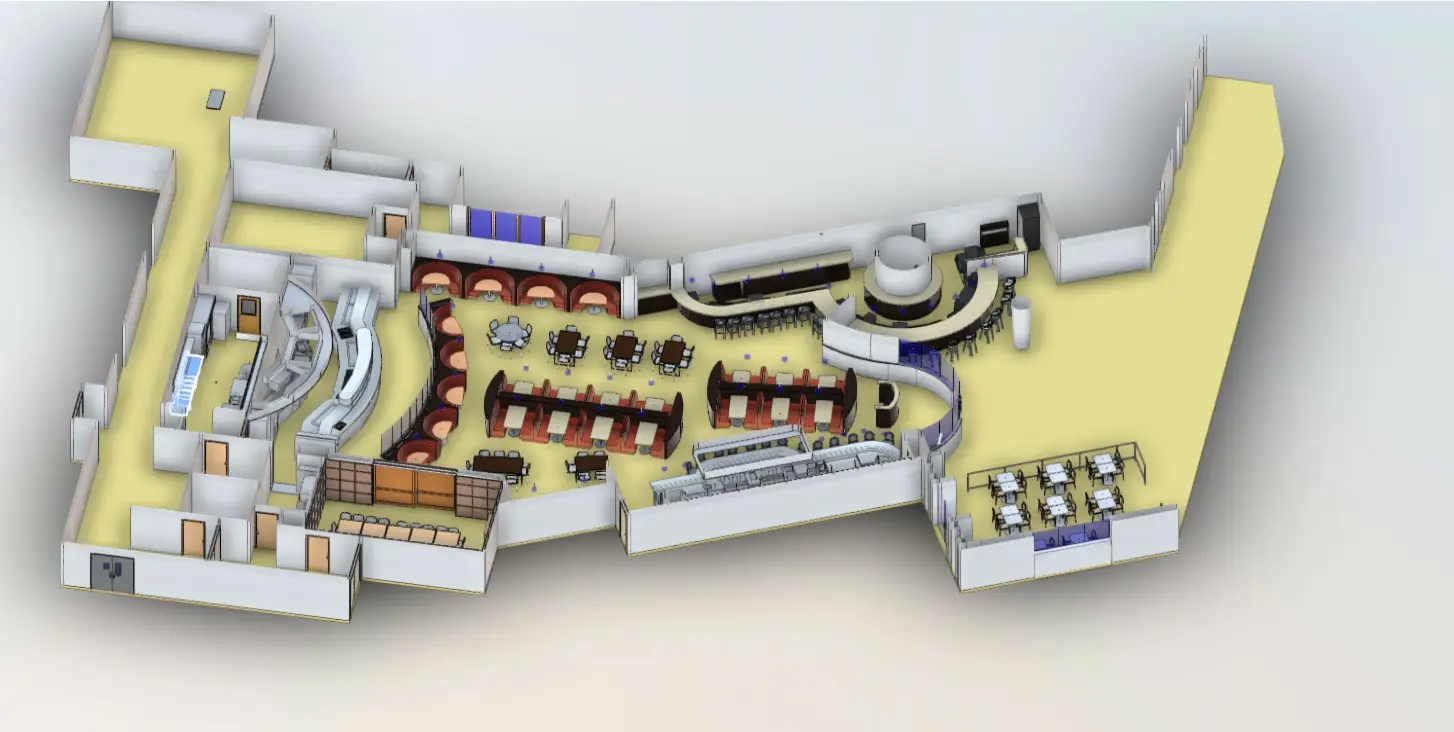
For projects with a BIM workflow, or for larger restaurant chains standardizing on Revit for facility management, the point cloud feeds directly into a Revit as-built model. The model can be built to LOD 200, 300, or 350, depending on the project’s coordination requirements. MEP elements, structural components, and architectural geometry are all built from the same verified scan data.
Scan-to-CAD
For projects that need accurate 2D output without full BIM coordination, Scan-to-CAD services produce clean, layered CAD drawings from point cloud data. This is the right deliverable for permit submittals, health department documentation, and design development on mid-scale restaurant TIs.
Point Cloud Delivery
For owners and operators running their own design teams, or for engineering consultants who prefer to work directly in the raw data, registered point cloud files are available for direct delivery. Learn about point cloud services and compatible formats.
Turnaround from scan to deliverable runs five to 14 business days, depending on scope, with quotes returned within 24 hours of inquiry.
Where LiDAR Scanning Pays for Itself in a Restaurant Renovation
Renovation budgets for restaurant spaces range widely. A quick-service rebrand might run $150,000 to $400,000. A full gut renovation of a full-service restaurant in a major market can easily reach $1 million to $2.5 million or more. At those numbers, the cost of a LiDAR scanning engagement represents a fraction of one percent of the total project value.
The return comes from avoiding three specific cost categories:
Change Orders from Field Conflicts
According to FMI Corporation, construction change orders average 5% to 10% of total project cost on commercial renovation projects. For a $500,000 restaurant renovation, that’s $25,000 to $50,000 in unplanned cost exposure. The majority of change orders on renovation projects trace back to existing conditions that weren’t accurately documented at the design stage. LiDAR scanning for restaurant renovation documentation eliminates that category of RFI almost entirely.
Schedule Delays at Opening
A delayed restaurant opening isn’t just a construction problem. It’s a revenue problem. A 200-seat full-service restaurant generating $80,000 per week in revenue loses $11,400 per day it stays closed past its planned opening date. A two-week delay from a field conflict that accurate as-builts would have cost more than most scanning engagements by a significant margin.
Health Department and ADA Compliance Surprises
Restaurant renovations trigger health department reviews and, in many jurisdictions, accessibility upgrades. Both require dimensionally accurate documentation of existing conditions. Submitting drawings derived from unverified field sketches creates a real risk of rejection at plan check. Verified as-built drawings support clean permit submittals and reduce back-and-forth with reviewers.
A 2022 study by Dodge Data and Analytics found that projects using 3D laser scanning for existing conditions documentation reported 35% fewer field conflicts and 28% faster design phase completion compared to projects relying on manual field measurement. Those numbers scale directly to restaurant renovation economics.
When to Commission the Scan: Timing in the Renovation Workflow
LiDAR scanning produces the most value when it happens before design begins, not after drawings are underway. The ideal timing is:
- Owner or developer commits to the renovation scope
- The architect is engaged, or design fees are authorized
- LiDAR scanning for restaurant renovation documentation is commissioned before schematic design begins
- Point cloud and as-built drawings are delivered within five to 14 business days
- Design team begins schematic design from verified existing conditions
For projects already in design when a conflict is discovered, scanning mid-project still eliminates the guesswork from that point forward. It won’t undo previous design assumptions, but it prevents the conflict from cascading through the remaining scope.
For restaurant chains planning phased renovations across multiple locations, a portfolio scanning approach captures all locations in a standardized format, enabling the design team to apply a prototype efficiently across diverse existing conditions.
How LiDAR Precise Plans Handles Restaurant Documentation
At LiDAR Precise Plans, we have documented more than 4,200 buildings, including restaurants, hospitality spaces, retail environments, and commercial interiors across Las Vegas, Phoenix, Los Angeles, San Francisco, Denver, Salt Lake City, and Austin. Restaurant spaces represent a specific documentation challenge that we approach differently than open commercial floor plates.
Our process for restaurant projects starts with a pre-scan review of any available existing documentation, so we know where the gaps are before we set up the first scanner position. Scan sessions are scheduled to minimize disruption to your operations. The kitchen, dining room, bar, and back-of-house spaces each get appropriate scanner coverage to capture the MEP density and equipment clearances that matter most for your renovation design.
Deliverables are produced at plus or minus 2mm verified accuracy and matched to your project’s format requirements: AutoCAD (.dwg), Revit (.rvt), registered point clouds, or PDF. If your project needs a specific LOD for a Scan-to-BIM deliverable, we build to it. If you need a clean CAD set for a health department submittal, we produce that instead.
Quotes come back within 24 hours. Deliverables ship in five to 14 business days. Request your project quote now.
Why LiDAR Is the Right Starting Point for Every Restaurant Renovation
Every restaurant renovation starts with a question: what’s actually in there? The honest answer, without a scan, is that nobody knows with certainty. LiDAR scanning for restaurant renovation documentation turns that question into a verified dataset before a single design decision is made. It compresses the field verification phase, eliminates the assumptions that generate change orders, and gives every member of the project team, from the architect to the MEP engineer to the health department reviewer, a shared, accurate picture of existing conditions.
The cost of getting that answer right is measurably lower than the cost of getting it wrong mid-construction.
Ready to Start Your Restaurant Renovation With Verified Conditions?
LiDAR scanning for restaurant renovation documentation is the first decision that protects every decision after it. Call LiDAR Precise Plans at 888-543-2711 or request a quote and receive your project estimate within 24 hours.
Frequently Asked Questions